
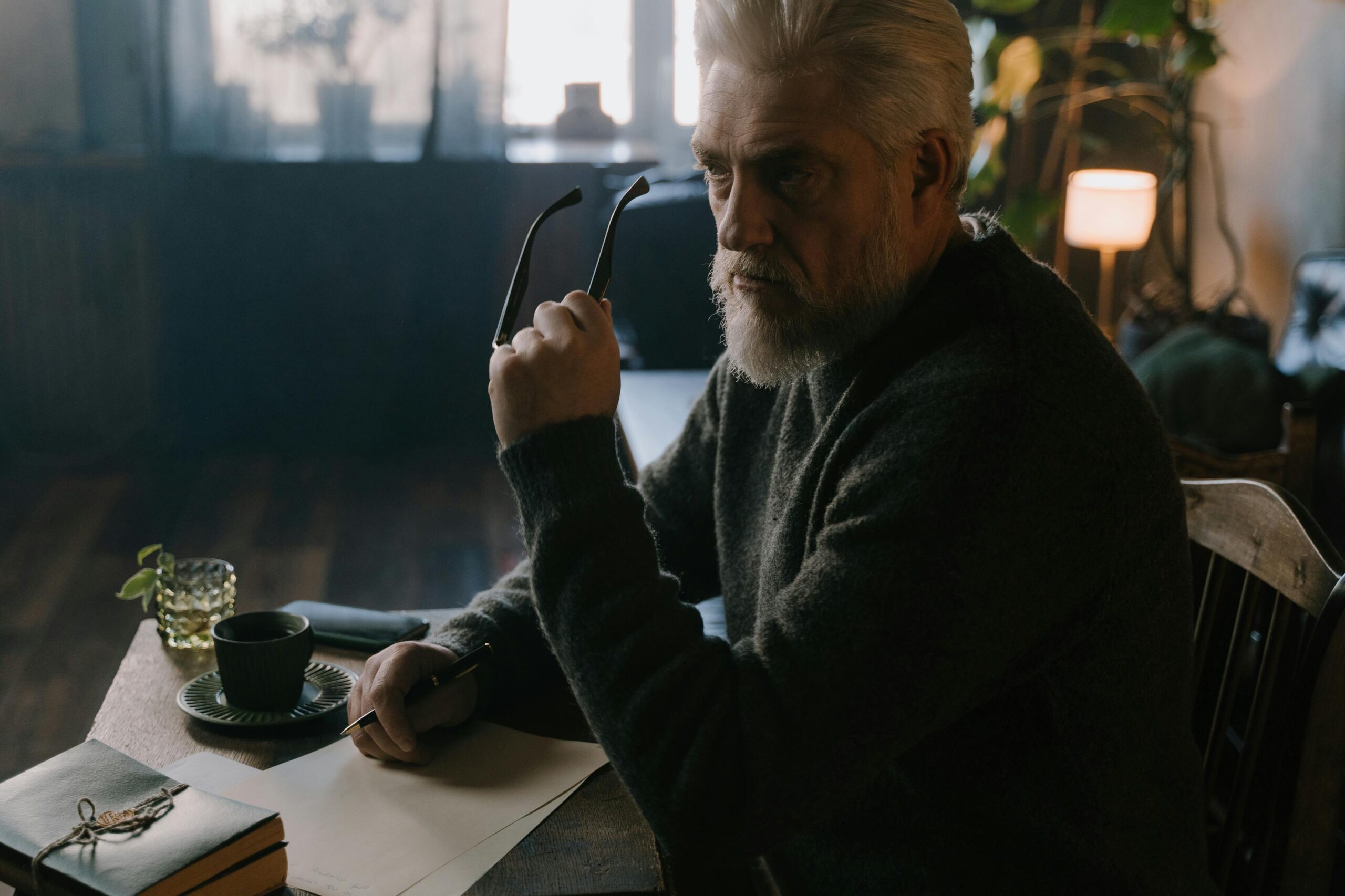
Finding purpose in retirement and leaving a career behind is one of the most significant transitions a person can face. The freedom is real, but so is the quiet disorientation that follows. Here is how to move through it with intention.
The first morning after your last day at work can feel surprisingly strange. You wake up without an alarm. The calendar is empty. Nobody is waiting for a report, a decision, or a phone call.
For decades, those pressures felt like burdens, and now they are gone. Yet for many people, what fills that silence is not relief. It is a question that is harder to answer than it looks:
Who am I now?
This is one of the least-discussed realities of retirement. Financial planning has entire industries built around it. The emotional side, the loss of structure, status, daily routine, and the colleagues who made Monday mornings bearable, tends to get a single paragraph in a brochure. That gap is where many retirees quietly struggle.
If you have felt a creeping sense of purposelessness after retiring, or if you are approaching retirement and already dreading that hollow feeling, what you are experiencing is not weakness or ingratitude. It is a human response to losing something that gave your life shape.
Why Work Gives Us More Than a Paycheck
Most people underestimate how much their professional role is doing for them beyond the income. Work provided structure, a rhythm to the week, a reason to be somewhere at a certain time. It provided social connection, often the densest network of daily human contact most of us have outside of family. It provided identity: a clear, socially legible answer to the question “what do you do?” And it provided a sense of contribution, the feeling that your effort mattered to someone.
When retirement removes all of those things simultaneously, it is not simply that you have more free time. There are four different needs: structure, connection, identity, and purpose. All lose their primary source at once. That is a significant loss, even when the retirement itself was wanted and planned.
    Source: PubMed Central     Source: Study Finds         Source:
                                                           Rural Health Information Hub
The numbers make clear that this is not a personal failing. It is a near-universal challenge, and one that the research community takes seriously.
The psychologist and Holocaust survivor Viktor Frankl spent his life arguing that meaning is a human necessity, not a luxury. His work suggests that the absence of purpose is not merely uncomfortable. It is destabilizing at a fundamental level.
The Identity Problem Nobody Prepares You For Finding Purpose in Retirement
Ask someone to describe themselves and, more often than not, they will begin with their job.
“I’m a nurse.”
“I was a teacher for thirty years.”
“I ran the regional office for a logistics firm.”
Our professional roles become shorthand for who we are. When that role disappears, many retirees find themselves stumbling when someone asks what they do.
This is not vanity. It reflects something real: your career was probably the context in which you developed skills, made decisions that mattered, received feedback, and built a reputation. It took years. Of course, it became part of how you think of yourself.
“The real question isn’t what you’re retiring from. It’s what you’re retiring to.”
The path forward is not to pretend that professional identity didn’t matter or to chase busyness to avoid the question. It is to actively rebuild a sense of self around what remains when the job title is gone. That takes time and honesty. But it is entirely possible, and for many people, it leads to a richer self-understanding than they had during their working years.
Navigating Purpose and Identity in Retirement
The video below explores the emotional and practical dimensions of this transition, what quietly vanishes when a career ends, and how to begin replacing them with something that actually fits who you are now.
Take 10 minutes to watch this before continuing. It sets an important context for what follows.
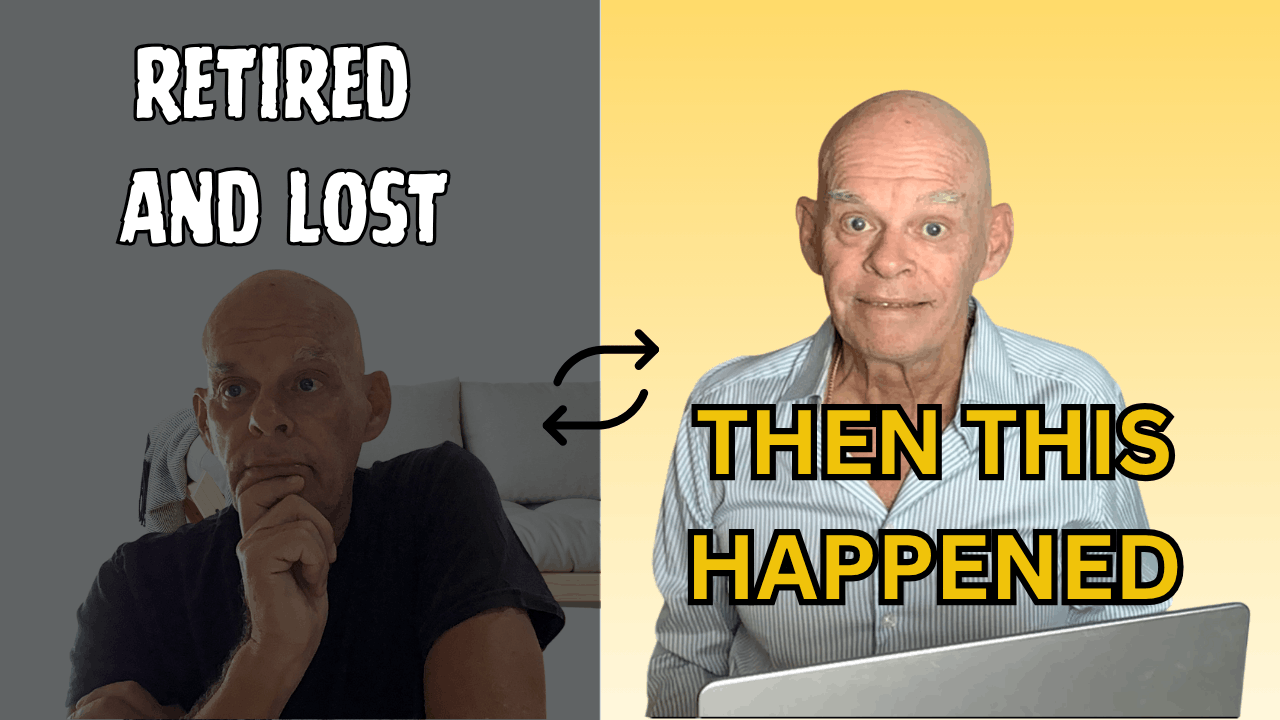
If the video resonated with you, you are not alone in recognizing those losses. The article continues below with practical approaches to filling the gaps it identifies.
Finding Purpose in Retirement: Where to Actually Begin
The word “purpose” can feel impossibly large when you are standing at the edge of an unstructured day. Most advice on the subject jumps too quickly to prescriptions. Take up volunteering, learn a language, get a dog, without acknowledging how disorienting the transition feels in the first place.
A more honest starting point is this: purpose in retirement rarely announces itself. It tends to be discovered by paying attention to what pulls you forward, even in small ways.
Start with what you already care about, not what you think you should do.
There is a tendency, especially among high achievers, to find purpose in retirement, treating it like a project with deliverables. They make lists of impressive hobbies, set targets, and measure results. This can work for a while, but it often lacks staying power because the motivation is external, ”this is what a fulfilled retiree looks like,” rather than internal.
A more productive question is: what have you consistently been drawn to throughout your life, even when you were too busy to pursue it properly? The answer does not have to be grand. It might be cooking, or local history, or fixing engines, or spending time with your grandchildren in a way that is genuinely engaged rather than obligatory. These are not trivial. They are the raw material of a purposeful retirement.
Rebuild the structure deliberately
One of the least romantic but most important aspects of finding purpose in retirement is structure. Without it, even genuinely meaningful activities tend to drift. The days blur together, motivation flags, and the sense of accomplishment that comes from completing something fades.
This does not mean replicating a 9-to-5 schedule. That would defeat part of the point. It means creating enough rhythm in your week that activities happen consistently rather than only when you feel like it. A regular commitment, whether to a class, a group, a project, or a volunteer role, provides the container in which purpose can take hold.
Invest seriously in connection
Social isolation is one of the most reliable predictors of poor health outcomes in older adults. It is also one of the more predictable consequences of retirement, because the built-in social infrastructure of work, the colleagues, the shared projects, the daily incidental conversation, disappears overnight.
Rebuilding social connections after retirement requires more active effort than most people expect. Former colleagues move on. Friendships built around a shared professional context may not survive the transition intact. This is normal and not a reason for despair. It is a reason to invest in new relationships and communities before the need feels urgent.
Redefine what contribution means
Much of what made work meaningful was the sense of contributing to something beyond yourself — a team, a project, a client, a community. That need does not retire when you do.
Volunteering is the obvious answer, and for many people it works. But contribution can also look like mentoring younger people in your field, helping out in your community, teaching something you know well, or supporting family members in ways that matter. The common thread is that your effort improves something for someone else. That experience, being useful, is a powerful source of meaning at any age.
A Practical Checklist For The First Year
KEY MOVES FOR FINDING PURPOSE IN RETIREMENT
- Name the four things work gave you – structure, identity, connection, contribution, and address each one separately, rather than hoping a single activity covers all four
- Give yourself three to six months before judging how retirement feels – early disorientation is normal and is not a sign you have made a mistake
- Create a weekly rhythm with at least two or three fixed commitments outside the house – loose intentions rarely hold without a schedule
- Pursue one thing you have delayed – not because it will become your life’s work, but because deferred interests carry real energy when you finally give them space
- Actively seek new social contexts – a class, a club, a volunteer group, where relationships form around shared activity, not shared history
- Talk honestly about how you are feeling – whether with a partner, a trusted friend, or a professional. Retirement is a major life transition, and it deserves the same attention as any other major transition.
What Nobody Tells You: It Often Gets Better, Significantly
The early months of retirement are frequently the hardest. The research on subjective well-being in retirement consistently shows a U-shaped curve: an initial dip in the first year or two, followed by a gradual recovery as people establish new rhythms, relationships, and sources of meaning.
People who approach retirement with a plan, not just a financial plan, but a considered answer to the question of how they will spend their time and who they will spend it with, tend to navigate the transition better.
But even those who arrive at retirement without that clarity can find their footing. It simply takes longer and often requires more deliberate action than you might expect.
“Retirement isn’t the end of a meaningful life. For many people, with enough honesty about what they actually need, it becomes the most purposeful chapter they have lived.”
The people who thrive in retirement are not uniformly those who stay busiest, or those who travel the most, or those with the largest social circles. They are, more reliably, the people who have worked out what matters to them and made consistent choices in that direction, quietly, without needing external validation that they are doing retirement correctly.
The Long View: Finding Purpose in Retirement as a Redesign, Not a Conclusion
The framing matters. Retirement, thought of as an ending, of usefulness, relevance, or productive life, tends to produce exactly the malaise it fears. Retirement, thought of as a redesign of how you spend your time, your energy, and your attention, tends to produce something quite different.
You have a set of skills, experiences, relationships, and values that took decades to develop. None of that disappears on the day you leave work. What changes is the context in which those things express themselves. Finding purpose in retirement is, at its core, about discovering what that new context can be, and giving yourself permission to build it. That is not a small thing. But it is entirely within reach.
If you are navigating this transition, finding purpose in retirement, whether you retired last month or are counting down the weeks. The most useful thing you can do is start an honest conversation with yourself about what work was actually giving you, and what you want the next chapter to honestly look like. The video above is a good place to begin that reflection.
—
Want to stay up to date on new posts just like this one?
and get the latest posts automatically via email

Jan O. Nilsson –Finding Purpose in Retirement: How to Rebuild Your Identity When Work Is No Longer the Answer <== to the top of the page
Follow me: