
Your most valuable asset at retirement isn’t money. Most people focus on their savings first. Social Security, healthcare, and other practical steps are in place. As a final check, you talk to your financial advisor, who focuses on money. But is money really your most valuable asset?
Money is important, no doubt about that, but it’s easy to forget the hidden asset you already have.
When you are retiring, you get the question:
“What are you going to do when you retire?”
We’re supposed to have it crystal clear what to do for the rest of our lives before retirement even starts. Some vague ideas are always there, like playing more golf, meeting friends more often, and spending more time with family. That’s fine, but when the first phase of retirement, what I call “the vacation phase,” is over, what comes next?
Unlock Your Most Valuable Asset
The second phase of retirement is often shaped by daily routines. Those routines are useful, but they can also make retirement feel a bit boring. A kind of emptiness sneaks in. Something is missing.
Think about your corporate time. Yes, you had routines to follow, but new projects kept popping up. Developing new products and services is the only way a company survives long-term. You were an important piece of the company’s evolution.
Why should retirement be different? We focus on retirement savings and funds, and build a lifestyle around them. But what happens if you refocus your goals and planning on something you have not even thought about yet:
Your most valuable assets, which have been safely hidden in your treasure box.
Wisdom
Abraham Lincoln once wisely said:
“In the end, it’s not the years in your life that count. It’s life in your years.”
Wisdom can’t be expressed better than that. It’s not something you can learn by reading a book, watching a video, or even listening to other people. It only comes after time lived.
It’s like a good Cabernet Sauvignon vine. You can have the best grapes growing on the most prestigious vineyard; the final quality only comes with age.
What an asset you get for free when you get older.
Your Experience
Think about it for a while. You have been working 30-something years. What did you learn during this time? A lot! No youngster can compete with you for one simple reason: age and life lived. Simple as that.
Use your experience, both positive and negative. You don’t need to repeat the same mistakes experience has taught you. Instead, you know what works and what doesn’t.
Your Knowledge
All years of experience have given you knowledge. As an accountant, for example, you know how to navigate the figures when pulling together a balance sheet. As a teacher, you know how to help pupils who struggle with something complex.
This knowledge is worth gold and is part of your most valuable asset. And from that knowledge, new skills have also grown.
Your Skills
Close to knowledge come skills. By repeating the same work over and over, you become skilled. As a parent, you know exactly how to educate the third child, something you didn’t have a clue about when your first child was born.
Skills come with time and repetition, not from reading instructions. They also shape the values you carry with you.
Your values
Life is a journey. We learn good things and bad ones. Over time, you build an arsenal of values that shape how you think and how you treat people around you.
- Kindness
- Gratitude
- Helping others
- Listening
- Accept other opinions
This bank of values will shape you as a person and follow you for the rest of your life. And beyond that, they are tied to your relationships and story.
Your relationships and story
Life is like a thick book of relationships of all kinds. Your story counts. How did you get your first job? How did you meet Mom? Your grandkids would like to know, after 50 years of marriage. You know the political situation during the Vietnam War, while your kids and grandkids can only read about it in history books.
Open up your personal storybook. Talk to people who are interested in your lived experience. When you do, you’ll start to see how all these assets fit together.
Let Your Most Valuable Asset Surround Retirement
Your most valuable asset isn’t your bank account, your house, or your retirement fund — it’s something you’ve spent your whole life building without ever writing it down.
If you’re retired or getting close, you’ve probably spent decades measuring success by one number. In this video, I’ll show you what your most valuable asset really is, where it’s hiding in your own life, and four simple ways to start using it.
This isn’t about estate planning or leaving money behind. It’s about recognizing what you already have and finally doing something with it.
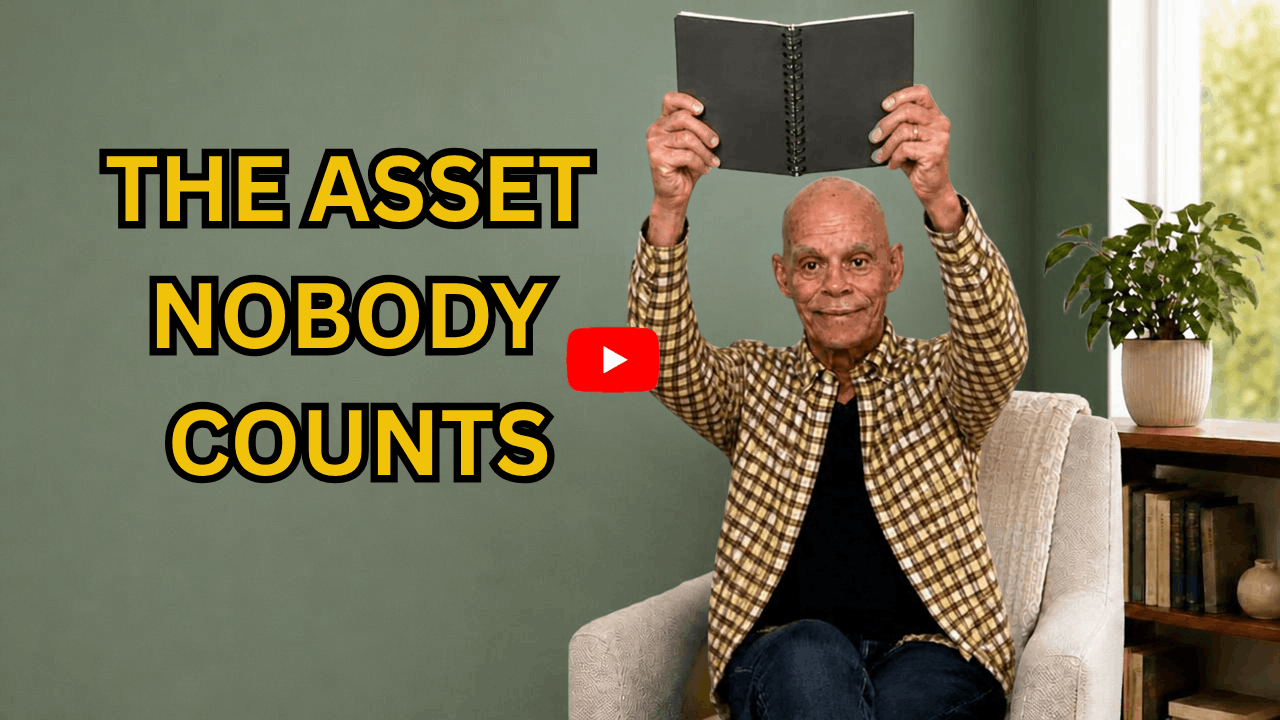
What stood out to you in this video? Leave a comment and start the conversation.
“Your most precious asset is your right thinking!”
Mehmet Murat Ildan
Reset And Explore Your Most Valuable Asset
Retirement isn’t a test you have to pass to enter. You don’t need a perfect budget, a luxury house, or a Lamborghini to feel fulfilled. What you need is to recognize that your hidden, most valuable asset is already in your hands.
- Wisdom
- Experience
- Knowledge
- Skills
- Values
- Relationships & Story
Start cultivating those hidden assets.
—
Want to stay up to date on new posts just like this one?
and get the latest posts automatically via email

Jan O. Nilsson –To Use Your Most Valuable Asset In Retirement, You Don’t Need To Have Everything Figured Out <== to the top of the page
Follow me: